

Two Paths, One Goal – Understanding the Difference Between Small Businesses and Startups
Written By: Melissa Saavadera, Office of Entrepreneurship Director
Not all entrepreneurs are the same.
Their goals, funding needs, timelines, and growth potential differ. Yet each plays a vital role in shaping Nevada’s economy.
Understanding these differences are essential for developing smart policy, making targeted investments, and ensuring Nevada continues to support both the backbone of our communities and the innovators driving our economic future.
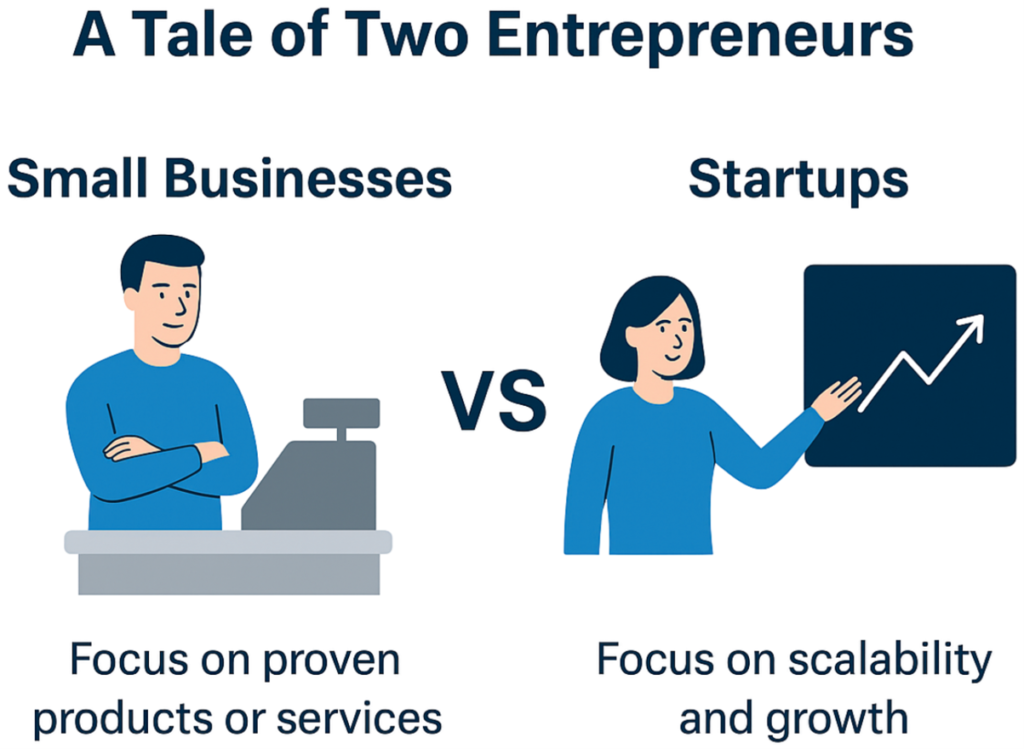
In their research paper by the Kauffman Foundation, A Tale of Two Entrepreneurs: Understanding Differences in the Types of Entrepreneurships in the Economy, Bill Aulet and Fiona Murray, both at the Martin Trust Center for MIT Entrepreneurship, their work highlights two major categories for entrepreneurship.
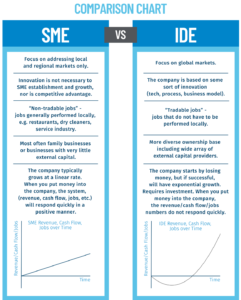 1. Small and Medium Enterprises (SMEs)
Local businesses form the heart of Nevada’s communities including restaurants, salons, construction firms, retailers, and service providers. They tend to serve local or regional markets, grow steadily, and play a vital role in keeping communities vibrant and connected.
2. Innovation-Driven Enterprises (IDEs)
Companies aiming higher often develop new technologies or business models designed to reach national and global markets. They are typically capital-intensive, high-risk, and high reward. When successful, they generate massive impact by creating high-wage jobs, attracting investment, and positioning Nevada as a hub for emerging industries such as clean energy, advanced manufacturing, and biotech.
The key insight from Aulet and Murray’s work is understanding these two types of entrepreneurs require different kinds of support.
Support for Small Businesses
Small businesses thrive with access to loans, simplified licensing, and local mentorship.
Traditional Loan Financing
Capital provided by banks, credit unions, or community lenders to help businesses start, operate, or expand. These loans typically require credit history, collateral, and a demonstrated ability to repay. Loan amounts vary depending on business needs and financial capacity.
Microloans
A smaller form of traditional lending designed primarily for startups, small businesses, and underserved entrepreneurs who may not qualify for conventional loans. Offered through community lenders or nonprofit organizations, microloans can support working capital, inventory, equipment, or other essential business expenses. Nevada’s SSBCI Microloan program can provide financing up to $250,000. SBA funding intermediaries offer up to $50,000, while the average microloan is about $13,000.
Technical Assistance
Hands-on support and guidance provided to entrepreneurs and small businesses to strengthen operations and improve success. This can include help with business planning, marketing, accounting, licensing, access to capital, and government contracting. Technical assistance providers such as Small Business Development Centers (SBDCs), APEX Accelerators, and chambers of commerce offer training, mentoring, and one-on one advising to help businesses navigate challenges and grow sustainably.
Support for Small Businesses
Startups rely on different resources including venture capital, research partnerships, technical expertise, and patient funding.
Venture Capital
Private investment provided to promising startups in exchange for partial ownership. These funds help young companies develop products, hire staff, and expand operations long before they generate large revenues. Venture capitalists take on higher risk in hopes of higher returns once the company succeeds.
Patient Funding
Financial investment provided with the understanding innovative companies often need time to research, test, and refine their products before generating steady revenue. Unlike traditional loans or short-term investments, patient capital supports sustainable, long-term growth.
Two Paths, One Vision for Nevada
The application for the Office of Entrepreneurship is clear: SMEs and IDEs require different types of support, but both are essential to a thriving economy.
The Office of Entrepreneurship recognizes these unique needs and is committed to building distinct but complementary pathways for every type of entrepreneur. Whether it is the neighborhood coffee shop employing residents or the clean-energy innovator reshaping global markets, both strengthen Nevada in powerful and unique ways. Our mission is to ensure every entrepreneur, regardless of their path, has access to the resources, technical support, and funding they need to succeed. When both types of entrepreneurs grow side by side, Nevada’s economy becomes stronger, more resilient, and better positioned for the future.
Aulet, W., & Murray, F. (2013). A Tale of Two Entrepreneurs: Understanding Differences in the Types of Entrepreneurship in the Economy. Kauffman Foundation. https://papers.ssrn.com/sol3/papers.cfm?abstract_id=2259740.